Vivian Maier
Unseen Work
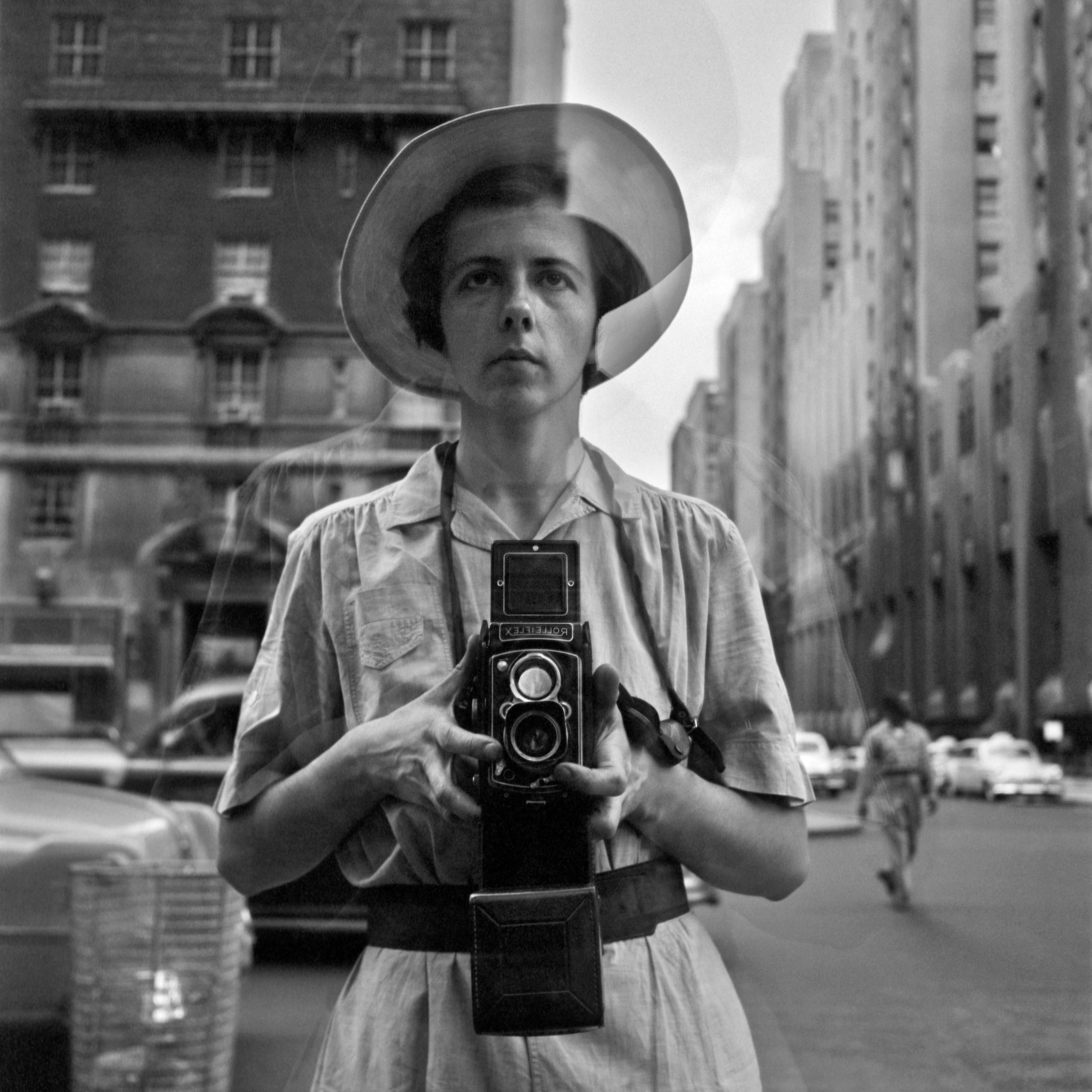
The life’s work of one of the most legendary street photographers of the 20th century, Vivian Maier, who captured the raw, hidden sides of urban life and its often-overlooked stories.
ABOUT THE EXHIBITION
On March 13, 2026, the major solo exhibition Unseen Work by Vivian Maier (1926–2009), one of the most legendary street photographers of the 20th century, opens at Fotografiska Shanghai.
Coinciding with the centenary of her birth, this debut exhibition in Shanghai will systematically present over 200 vintage and modern prints black-and-white and color photographs, a selection of previously unseen images from her travels in Asia (including images shot in Hong Kong and Macao, China), a special screening of motion-picture footage captured with her 8mm camera, and personal artifacts – including her Rolleiflex twin-lens camera and her Leica 35mm, and iconic hat - inviting audiences into the rich and hidden narrative behind her lens.

Vivian Maier has been described as "the most mysterious photographic genius of the 20th century," her life marked by dramatic contrasts. Born in New York and raised in France, Maier returned to the United States in 1951 and worked as a nanny for most of her life. Over five decades, between caring for kids, she walked the streets of American cities with her camera, quietly creating more than 150,000 photographs along with numerous films and audio recordings — weaving a visual epic of her own.
Her travels extended to Canada, several European cities, Philippines, India, Yemen, and even the Chinese cities of Hong Kong and Macao, where she similarly captured urban rhythms through her lens. Through the keen eye of an “outsider,” she captured fleeting moments of ordinary life in mid-20th-century America, documenting the lives of marginalized communities and the quiet transformation of cities.
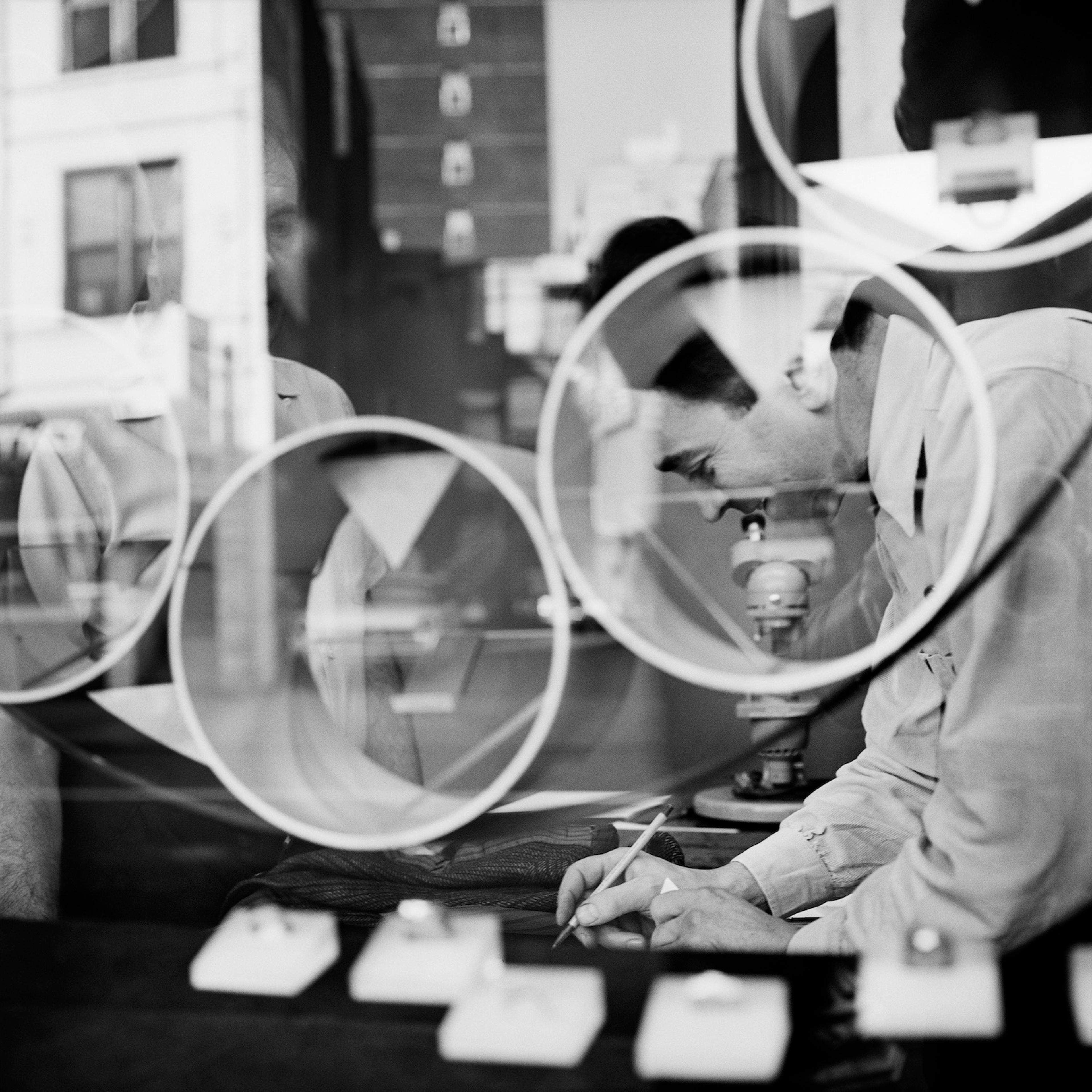
This “hidden creator,” unknown to the public during her lifetime, was only discovered by chance in 2007, when Chicago history enthusiast John Maloof purchased a portion of her negatives at a storage auction, gradually uncovering her vast archive of undeveloped film. Lacking formal training, Maier had a masterful ability to seize the “decisive moment,” constructing a unique visual language through tight compositions and high-contrast lighting. Her work blends human compassion, humor, and profound social observation, hailed by The New Yorker as “an achievement that rewrites photographic history,” placing her alongside documentary masters such as Diane Arbus and Robert Frank. Her story reached wider audiences with the 2014 Oscar-nominated documentary Finding Vivian Maier by Charlie Siskel and John Maloof.
The exhibition, curated by Anne Morin, is presented by Fotografiska in collaboration with diChroma photography and is supported by Women In Motion, a Kering program that celebrates women in the arts and culture. The presentation of Unseen Work in Shanghai is supported by SIGMA.
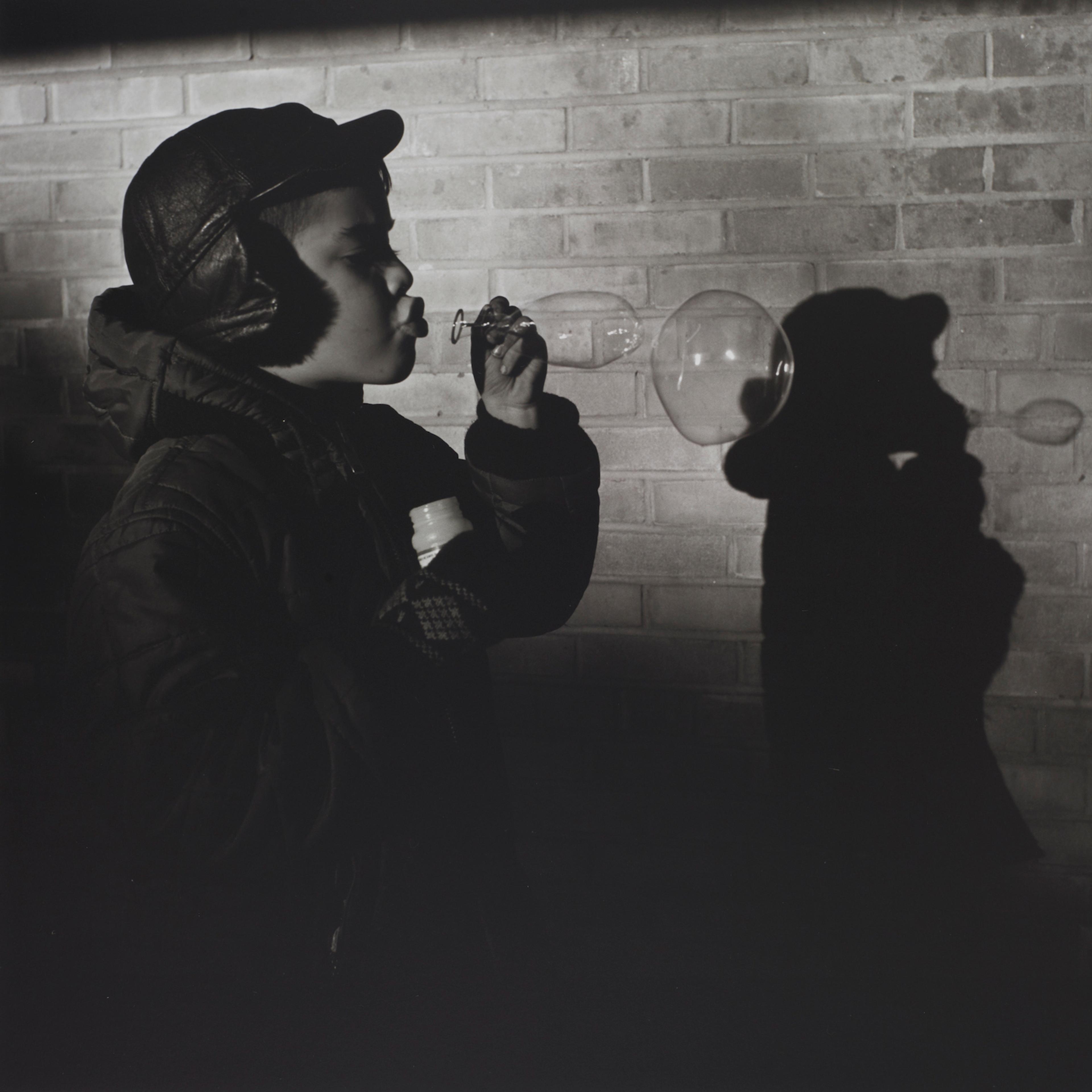
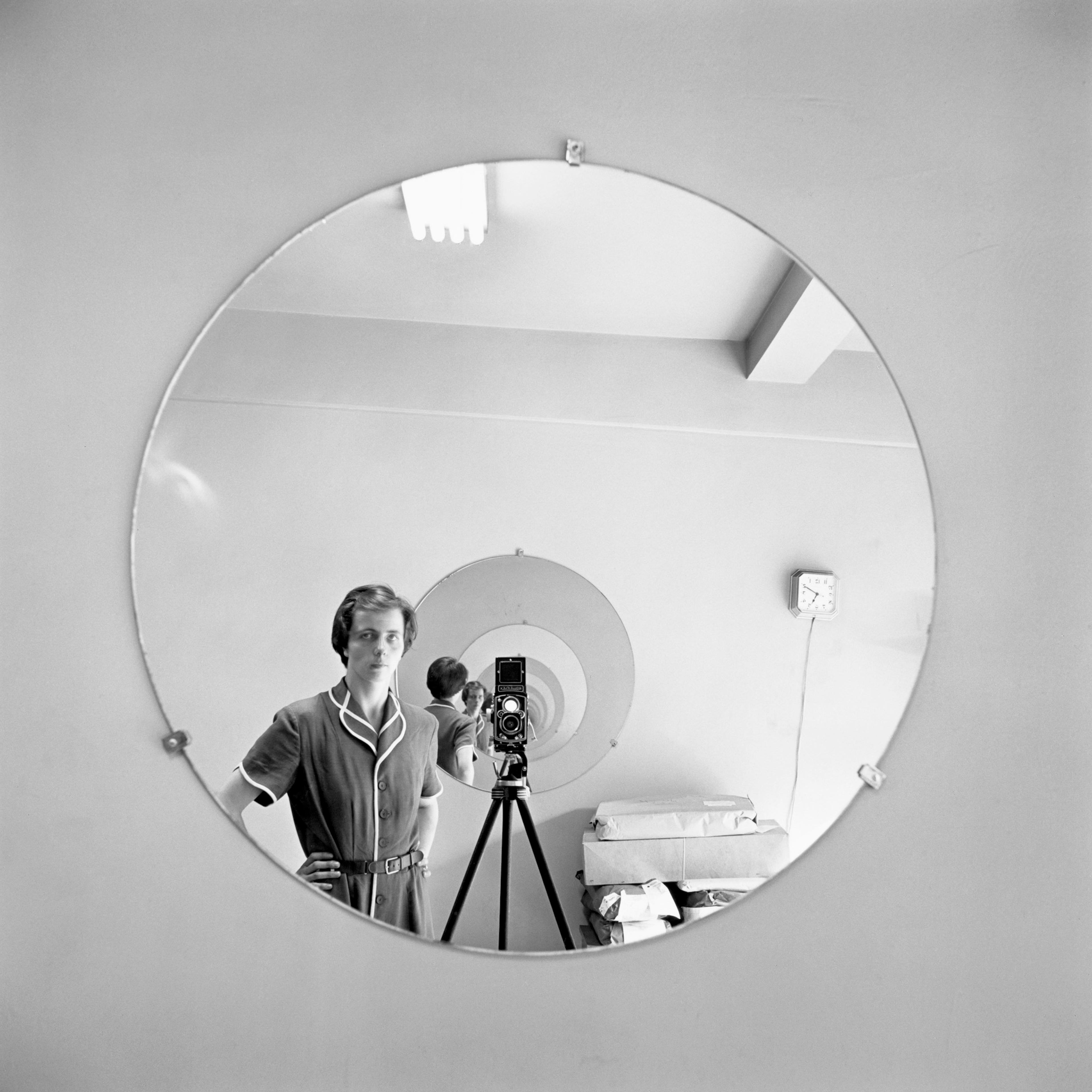
Structured along thematic lines, the exhibition traces the full arc of Maier’s multi‑phase career. Long before “self‑portrait” became a cultural phenomenon, Maier was already a subtle practitioner of the form, using reflections in shop windows, mirrors, and her own shadow to create thoughtful, metaphorical, and introspective self‑images that explore the complex relationship between self‑identity and public space. Her black‑and‑white street photography focuses on the daily lives and diverse social strata of American cities from the 1950s to the 1970s—the elderly, workers, ethnic minorities, children—observed with a calm yet tender gaze, building a vivid poetic chronicle of society. In her later years, her experiments with color photography reveal a new exploration of abstract form and material texture.
Vivian Maier never printed most of her negatives and never actively showed her work to the world. She created out of pure love, driven solely by an inner calling. This almost stubborn purity feels particularly precious today. Through this exhibition, visitors are invited to step into her solitary yet richly expressive inner world for a visual dialogue across time and space.
ABOUT THE ARTIST
Vivian Maier (1926–2009), an American of French and Austro-Hungarian extraction, Vivian bounced between Europe and the United States before coming back to New York City in 1951. Having picked up photography just two years earlier, she would comb the streets of the Big Apple refining her artistic craft. By 1956 Vivian left the East Coast for Chicago, where she’d spend most of the rest of her life working as a caregiver. In her leisure Vivian would shoot photos that she zealously hid from the eyes of others. Taking snapshots into the late 1990′s, Maier would leave behind a body of work comprising over 150,000 negatives.
ABOUT THE CURATOR
Anne Morin, a graduate of the National School of Photography in Arles and the École Supérieure des Beaux-Arts in Montpellier, Anne Morin is the director of diChroma photography, a company specializing in international traveling photographic exhibitions and the development and production of cultural projects.
Recognized as one of the foremost experts on the work of Vivian Maier, Anne Morin works for the revaluation and greater visibility of artists and photographers. She has curated numerous exhibitions of prestigious photographers and artists such as Berenice Abbott, Sally Mann, Robert Doisneau, Jessica Lange, Jacques Henri Lartigue, Rodney Smith and Saul Leiter, among others.
In 2022, she was awarded Curator of the Year by the Lucie Awards at Carnegie Hall in New York for her work on Vivian Maier's exhibition, Unseen, at the Musée du Luxembourg, Paris.
Supported by
DICHROMA PHOTOGRAPHY
diChroma photography (Madrid) is a company specializing in international traveling photographic exhibitions and the development and production of cultural projects.
diChroma photography works for renowned museums and institutions such as the Fundación Canal (Madrid), Martin-Gropius-Bau (Berlin), the Musée du Luxembourg, the Jeu de Paume (Paris), the Palazzo Ducale (Genoa), etc.
diChroma photography accompanies its exhibitions with an editorial activity, publishing catalogs, essays and art books such as Antonio Lopez: Visionary Writing; Margaret Watkins: Black Light; or Vivian Maier, co-edited with the Réunion des Musées Nationaux (RMN).
www.dichroma-photography.com
Kering
Kering is a global, family-led luxury group, home to people whose passion and expertise nurture creative Houses across couture and ready-to-wear, leather goods, jewelry, eyewear and beauty: Gucci, Saint Laurent, Bottega Veneta, Balenciaga, McQueen, Brioni, Boucheron, Pomellato, Dodo, Qeelin, Ginori 1735, as well as Kering Eyewear and Kering Beauté. Inspired by their creative heritage, Kering Houses design and craft exceptional products and experiences that reflect the Group’s commitment to excellence, sustainability and culture. This vision is expressed in our signature: Creativity is our Legacy.
Women In Motion
Kering's commitment to women is at the heart of the Group's priorities and, through Women In Motion, extends to the arts and culture, where gender inequalities persist, even though creation is one of the most powerful vectors for change.
In 2015, Kering launched Women In Motion at the Festival de Cannes with the ambition of highlighting the talent of women in cinema, both in front of and behind the camera. The program has since been extended to other artistic fields, including photography.
Through its Awards, the program salutes the influence of inspirational figures and provides concrete support for emerging talent. Its Talks and Podcasts provide a forum for personalities to share their views on the representation of women in their professional environment.
A pioneering program created more than 10 years ago, Women In Motion highlights the talent and diversity of the voices shaping the artistic world. More than a celebration, this decade marks a milestone in the Group's commitment to providing a space for dialogue and action, in order to continue promoting the recognition and influence of women in creation.
Vivian Maier Unseen Work in Shanghai Supported by
SIGMA
Founded in Japan in 1961, SIGMA has always approached the world through imaging, focusing on the exploration of optics and photographic technology. Every press of the shutter—whether driven by emotion or quiet contemplation—is a creator’s response to time and the world. Committed to being a trusted partner, SIGMA accompanies creators in experiencing the value of imaging art, while offering possibilities for diverse creation through the SIGMA GLOBAL VISION lens series, the BF, fp, and fp L cameras, and the unique Foveon X3 sensor.
The Sigma Foundation, established by SIGMA’s global CEO Kazuto Yamaki, aims to support and promote photography. As an essential part of the brand’s artistic initiatives, the foundation collaborates with artists, participating in the creation and presentation of their work, extending the spirit of imaging into contemporary culture.
Vivian Maier Unseen Work in Shanghai Special Thanks to
Nippon Paint China
The wall coatings for this exhibition were provided by Nippon Paint China. Since entering the Chinese market in 1992, Nippon Paint China has been committed to its corporate mission of "Refreshing wonderful living space." Through continuous exploration and innovation, the company has developed a wide range of colors, products, and services tailored to the needs of the Chinese market and consumers, helping to bring the public’s vision of a better life to life.